
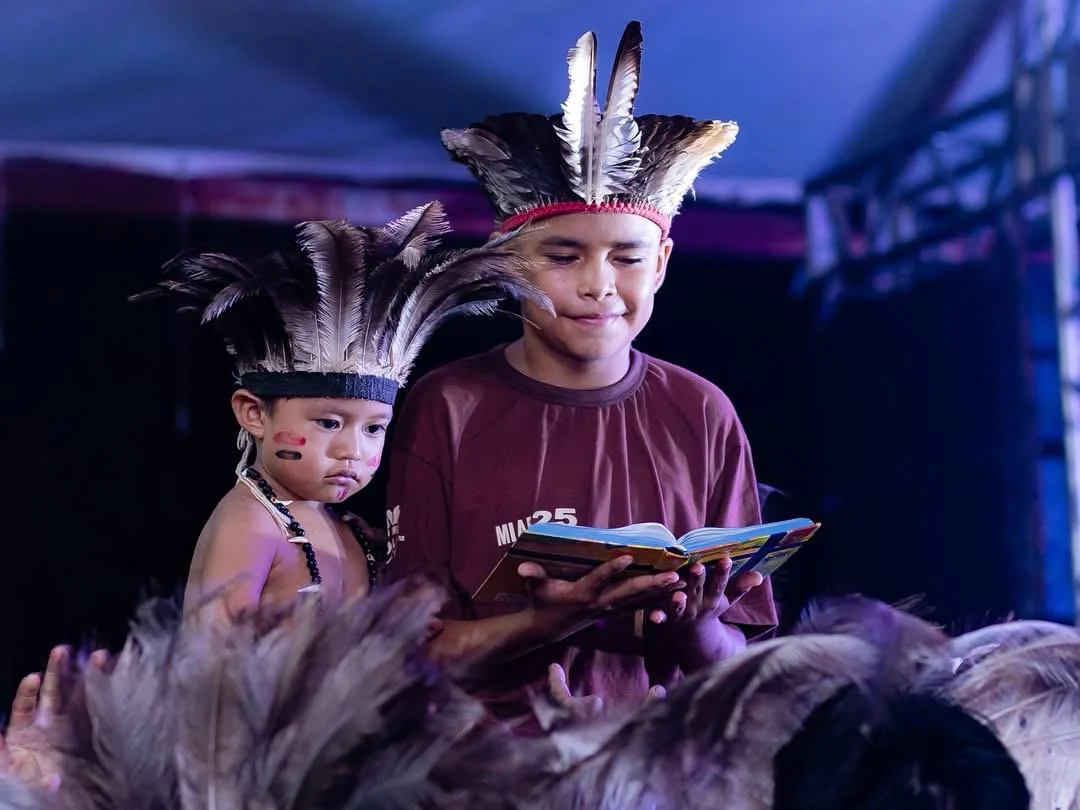
Well over a hundred years ago, a Terena elder stood in his village, in the dark night, worrying about the future of his children and grandchildren. As he gazed into the gloom, he saw a light beaming down into the mango grove. Astonished, he told others what he had seen. Now, after driving slowly down a bumpy road through a lush emerald landscape, we arrived in Bananal, that same village in Mato Grosso do Sul, Brazil. Excitement charged the air as people gathered for the weekend to celebrate the 100th anniversary of this local church established in the very spot where the light had shone. I believe God was smiling a century earlier because He knew the good that would come.
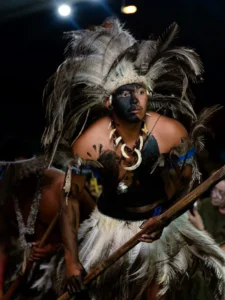 It is impossible to do justice in describing the festivities that began Friday, February 6, 2026, and carried on, unabated, until Sunday. Even we “old folks” managed to stay awake because there was always something amazing to watch or hear. Several groups from other Indigenous nations joined the celebration, displaying incredibly impressive headdresses—genuine works of art. The traditional Terena one uses full length emu feathers, a grand, almost overwhelming piece if not for the natural dignity of the wearer.
Hot sticky weather did not dampen spirits as we listened to guest speakers. Pastor Eli Ticuna from the state of Amazonas set the tone and theme for the entire celebration: gratitude for what God has done for Indigenous peoples all over Brazil. Craig DeLille, of SAM, directed attention from the past to the future, challenging the Church to follow Christ-centered ideals as expressed in Acts. Pastor Jader de Oliveira, president of UNIEDAS (the Terena Evangelical Mission Organization) doubled down on Craig’s message, reminding us that the Church is not called to simply exist but to proclaim Christ.
In the afternoon, serious matters gave way to traditional wrestling matches and dances. The bravado and determination of winners and losers resulted in peals of laughter. I love that the Terena people so easily laugh at themselves. A spirit of joy permeated the community. The Terena Emu Dance and the Bate Pau (where dancers step precisely between bamboo rods that are tapped together by others) are still being learned and practiced. The collective singing and formal worship—sung with depth of feeling, often in both Terena and Portuguese, drew listeners into the presence of God.
“Come, now is the time to worship!”
“For all that you’ve done, I will thank you.”
“Inacoe Jesus, undi ne xene…” (Jesus said I have gone to prepare a place for you.)
One hymn emblematic for the Terena church is “How Great Thou Art” translated into Terena decades ago by elder Patricio Lili. Rarely does a gathering not include a gorgeous, four-part harmony rendition of the classic, making this gathering no exception. It was sung several times and mentioned as an anthem of Terena Christian identity.
It is important to note that when the Gospel arrived to the Terena people, they were known for alcoholism, seemingly with little hope as a people. Today they are known across Brazil as a vibrant Indigenous group, retaining their language and village life while simultaneously being recognized for leadership and participation in the broader culture. Many are university graduates, professionals in law, business, medicine, engineering, and anthropology, demonstrating God’s transformative work passed down through generations.
The conference ended in a celebration of the Lord’s supper. Deep gratitude was expressed for missionaries who had shared the gospel one hundred years ago. One speaker said, “I feel like heaven came down for a little while today!” Hearts were full as voices rang out with deep emotion singing “Because He Lives,” expressing new hope and unity among evangelical Indigenous people. For us, it was an incredible and challenging experience.
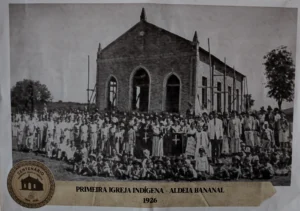
Heading back home over the winding dirt road, I could not help but imagine what it would have been like traveling this exact route a century ago. One visitor from Argentina, a representative of NTMU (a historical sister of SAM) shared the moving story of the first missionary family. After a long, precarious river journey, the family with four little children traveled by ox cart. Then, while waiting for government permission to enter Bananal, they waited three weeks, during which time they camped in improvised tents by the side of the railroad track. Their efforts were not in vain.
Recent struggles threatened to destroy the local church in Bananal and membership had in fact diminished. However, the weekend brought renewal and hope. In recent decades the Terena church has grown, matured, and looked outward. At present, they have workers sharing the gospel in fourteen other Indigenous groups.
The light continues to overcome darkness. To God be the glory!
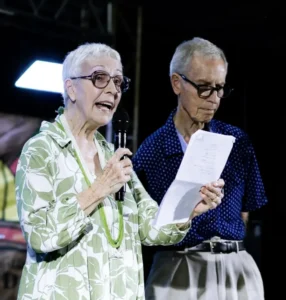 Trudy Seng and her husband Wes are retired missionaries of SAM. The older they get, the more they love God’s Word. Over fifty years ago, SAM sent them to the Terenas to teach. Now they have come full circle, living in a little house on a campus, doing what they love: teaching.