I sometimes wonder if our primos y primas* live in a constant state of grief. They mourn the absences in their lives—absences that surface in stories shared around the table, when moms compare notes about children eager to talk about their day at dinner. They carry the absence of so many: grandmothers, aunts, fathers, mothers, sisters, brothers.
They grieve the loss of stability and the uncertainty that lies ahead when they leave the institution which, though cold and crowded with other young men like them, has often been the most stable place in their young lives. They mourn their lack of rootedness—knowing little about who their parents were, what region of Colombia they come from, or what illnesses run in their Family.
Their grief shows itself in migraines and digestive problems, in silences and withdrawal. They can only receive so much affection, tolerate so much closeness, before pulling away again.
And yet, through their actions, they teach us what resilience looks like. They become brothers—sharing clothes, sharing whatever food they find, sharing a rented room even when it might put their own stability at risk. They find ways to laugh at their misfortune; when leaving they call out, “Como dijo mi papá, les abandono.”
They will not accept your pity. They know they are fighters. They are resilient. This is simply the hand they were dealt.
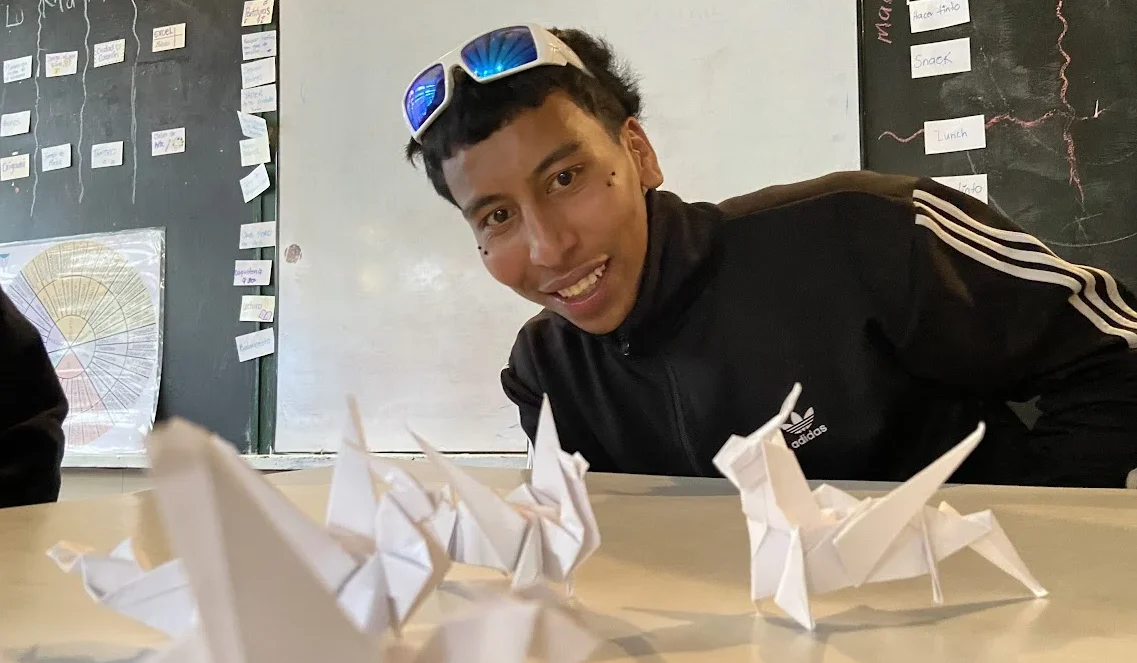
Matt is one of our primos.
He has started coming to the Resource Center a few times a week. He recently graduated as a graphic designer. He describes himself as shy and struggles with depression.
Matt knows of his mother and his older sisters. He entered the system at a very young age—“because my mom was poor,” he says. She came to the city, most likely displaced by the war, and lost her children when she could no longer provide for them.
When Matt was about nine years old, he and one of his sisters traveled to Montana to spend the summer with a family who was considering adopting them. The adoption eventually fell through, but Matt remains grateful for that summer. He remembers everything: the first meal they ate, playing with the other children in the family, the small details that stayed with him all these years. For reasons he never fully understood, the adoption did not work out.
In July, Matt will leave government care. By then he will have spent 23 years in the system. He plans to live with his mother. He has always dreamed of having the chance to live with her. One day, he hopes to get married and have a family of his own. And perhaps that hope is itself a kind of quiet courage—the belief that what was broken in one generation does not have to be the end of the story.
*Primos y primas is how we refer to the young people who grow up in government institutions after being removed from or abandoned by their families. They are the unadopted, and legally “children of the state”. Many have siblings in other countries, and many have spent most of their lives in institutions.
**Primos y primas means cousins, because we welcome them into our family of faith. We do not presume to be their parents or replace that role, but we are privileged to call them family.
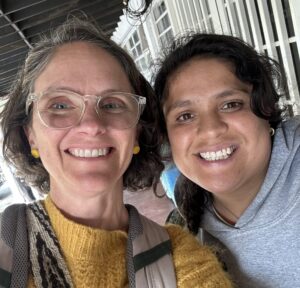 Ginny Enciso has been with SAM since 2015 in Bogotá, Colombia where she grew up as a missionary kid. She has four kids and a wonderful husband. She has a Masters in Clinical Counseling from Eastern Mennonite University and is a TBRI Practitioner. She enjoys running, reading, and gardening.